
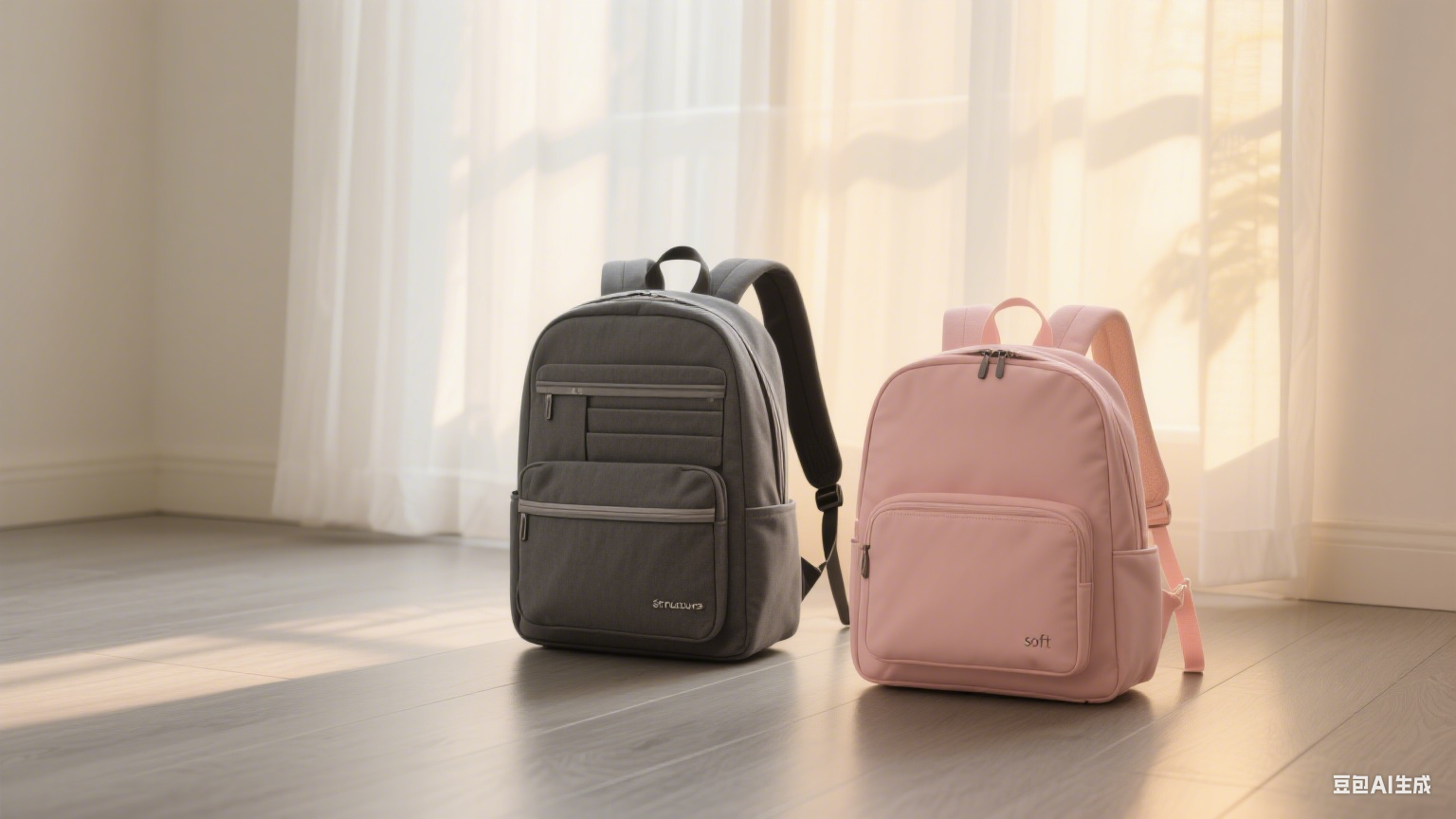
A structured backpack (also called a back panel or support system) features an internal frame designed to support the back and distribute pressure. It’s often used in ergonomic or “spine-friendly” backpacks.
So, what’s the real difference between a structured and a soft (non-structured) backpack?
Let’s compare them in terms of comfort, support, usability, and everyday practicality.
✅ Structured Backpacks: Supportive and Ideal for Heavier Loads
Advantages:
-
Better support and alignment
The back panel helps the bag follow the natural curve of a child’s spine, reducing pressure and preventing long-term discomfort — especially for children who carry more books and materials. -
More comfortable under weight
These bags often include padded, breathable mesh panels that improve air circulation and reduce pressure points, making them easier to carry for longer periods. -
Keeps its shape
Structured backpacks stay upright and firm even when half-full. They look neater and keep items inside from collapsing or shifting. -
Thoughtful design
Many high-quality structured backpacks also include ergonomic “S-shaped” shoulder straps, chest buckles, and lumbar support — creating a full comfort system.
Disadvantages:
-
Slightly heavier
Due to the internal structure, these backpacks tend to be a bit heavier than soft bags. -
Higher price
More materials and complexity often mean a higher cost. -
Less flexible for packing
Because of the firm shape, they’re harder to fold or compress into a suitcase or drawer.
.png?w=1536&h=864)
✅ Non-Structured Backpacks: Lightweight and Flexible for Everyday Use
Advantages:
-
Super lightweight
With no internal structure, soft backpacks are extremely light — great for preschoolers or kids who carry very little. -
Fun and playful designs
The flexible fabric allows for creative, cute shapes (like animals, cartoon characters, or plush styles) that young kids love. -
Budget-friendly
Perfect for short-term use or families with a limited budget. -
Easy to store and pack
They can be folded, rolled, or compressed for travel, making them versatile and portable.
Disadvantages:
-
Poor weight support
Without inner structure, items inside may press directly against the child’s back and cause discomfort if the bag is too full. -
Shape collapses easily
The bag may sag or lose shape, especially with heavier items, making it harder to organize and carry. -
Lacks spinal support
Not ideal for daily school use if the child needs to carry books, folders, or lunch boxes regularly.
🎯 So, How to Choose?
-
For kids with more books, supplies, and a daily school routine, a structured backpack offers better support and lasting comfort.
-
For toddlers, preschoolers, or weekend trips, a non-structured lightweight backpack is fun, easy to carry, and more flexible.
-
For extra activities or light travel, a soft backpack can serve as a handy backup.
.png?w=1536&h=864)
✨ Final Thoughts
Structured ≠ heavy; non-structured ≠ low quality.
The key is to choose based on your child’s age, daily load, and how often they carry their backpack.
At SUNEIGHT, our ergonomic backpacks use lightweight structured materials that balance support with comfort. We also offer non-structured casual styles for younger kids and casual use — because every child, every day, and every need is different.
Choosing the right backpack might seem small — but it's an investment in your child’s comfort, confidence, and healthy development.
#structured backpack for kids #SUNEIGHT backpack review #back to school tips